I’m Thomas and I started Small Tech to explore a simple question: how can we make our technology ask less of us?
A colleague recently admitted to me that he refuses to use the Teams app on his work laptop. Instead, he joins all his calls and sends all his messages from his Chrome browser. He believes sometimes being late to meetings is a fair price to pay to limit the bombardment of notifications and tracking that come with standalone apps these days.
This got me thinking: apps have totally captured how we engage with our digital lives on our phones, our tablets, and now our computers more than ever before. Was leaving the browser a mistake? And what did we give up when we did so?
I’d argue yes—we gave up control over our attention in the process.
I’m wary of any site that, outside of journals and newspapers, requires me to log in to view what they once offered for free. I’m particularly wary of any site, Reddit being the most prominent, that now requires an app to access what was previously accessible. We are being increasingly “app-walled” into their preferred behavior.
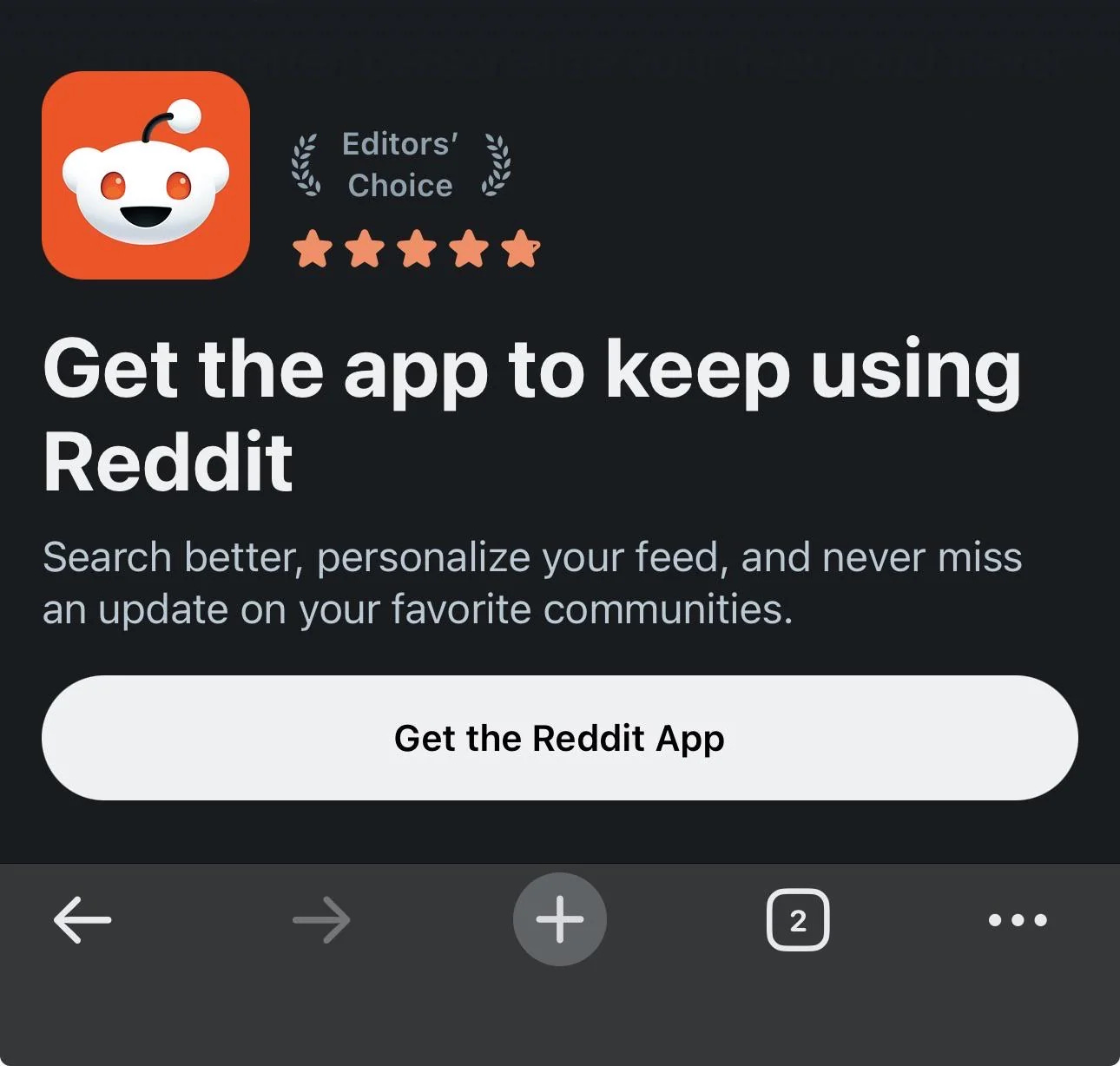
There are a number of reasons a company might want to encourage app usage, especially one like Reddit. Importantly, their business model is ads. They can offer more personalized experiences as well, ones that keep us more deeply engaged. Controlling the app end-to-end gives them dramatically more levers to pull. The cycle deepens as your phone begins to suggest these apps as popular and puts them even closer to your reach.
Apps make things immensely seamless once you are where they want you to be. A regular website can’t reach you at all to tell you to come back if you’ve never logged in, and if you don’t have the app they can’t generate notifications on your device either. This is more capture than convenience, yet we treat this as a completely normal and acceptable trade-off.
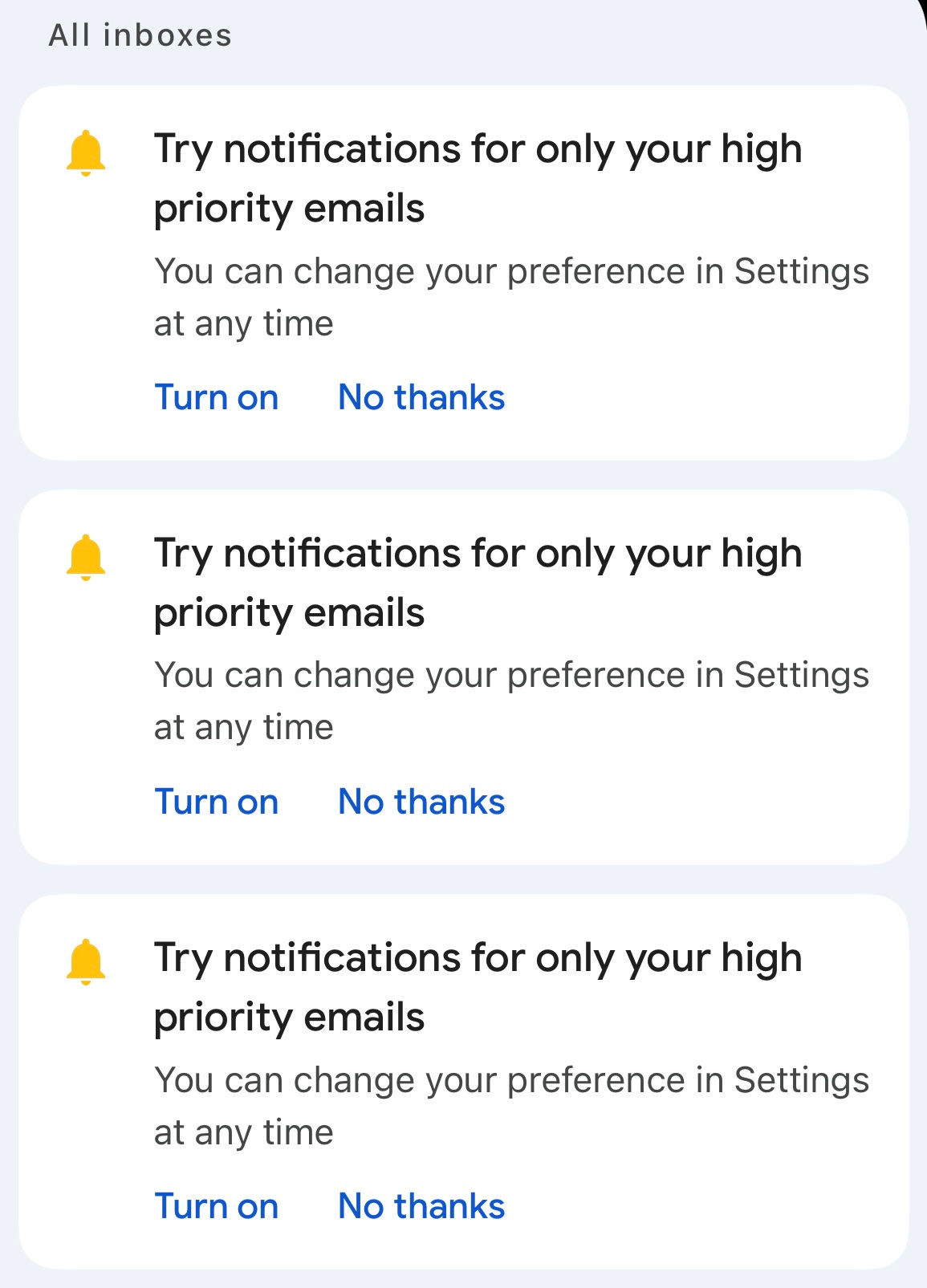
It is no surprise that all social media apps aggressively promote “staying up to date” with notifications which would otherwise be sequestered to a spam email inbox. Instead, these alerts are first-class citizens alongside calls from family members and breaking news. Like the subscription models themselves, they are never simply one-click to remove. One must wade through, as is the case with LinkedIn, literal hundreds of obscure options. If you don’t engage with those, such as with Facebook, they’ll text you too through the same number they otherwise use for multi-factor authentication for their other apps like WhatsApp.
I, like many others, would like to spend less time looking at my phone. Yet the options we have today to add friction that benefits us—rather than the companies creating these apps—are extremely crude. I don’t wish to carry around a dumb phone, an iPod, wired headphones, a notepad, an old digital camera, and a host of other things just to replace the device I already have. There are merits to being device-free, especially when spending time with others or around your local area, but for many it is simply not feasible. I will not drive or ride my bike without a phone.
If we do wish to alter things within the box of how we use our phones, we are quickly limited by wide-reaching screen time or app usage limits. Apple’s built-in controls here are quite poor and tie together blocking phone calls, sleep timers, specific locations, and even specific homepage views into just two settings. I do not want all of those things bundled together. I want my phone to be a phone and for those core functions to be predictable. There’s also screen time too, but you learn to power through the hurdles. There’s also not a sense of “let me finish this thing” either. It always seems to hit when I’m engaged with something deeply, so I hit the prompt, and by the time I get prompted again I’m already engaging with the next thing and the cycle repeats.
That’s where tools like Foqos come in, which I adore and is somehow free. It allows me to set the limits I’d like: turning off access to certain apps or even sites within Safari, without having to control who can reach me by call or text. It does so by requiring you to scan a QR code or tap an NFC tag to turn off or on the functionality.
There are still limits. Because the lever it controls is availability rather than use, it is completely binary—there’s no in-between, a problem shared with Apple’s controls. It’s easy to slip back into habitually scrolling LinkedIn, Reddit, or some other app or site once you’ve turned it off for a completely valid reason. Like a rip current pulling you away from shore before you know it, it is just too seamless.
What we’re really lacking, I’ve realized, is the ability to add a little bit of helpful friction to the more superfluous functions of our devices: social media, video watching, and similar. These apps, however, force you to play by their rules. So, I deleted all the apps that still remained: YouTube, Instagram, TikTok, Reddit, LinkedIn, etc.
That raises the question: did I ever really need entire dedicated apps for these? No, not really. By putting these out of immediate reach—note that you can create a URL as an app on the home screen if you absolutely need it—you add a very reasonable yet healthily unpredictable amount of friction. Some services like YouTube will try to get you to download the app with a header or occasional overlay, some like Discord might hide the ability entirely, others like Reddit will limit your usage, and all will have worse overall experiences just by nature of not being as optimized. But those weird interactions, those annoying logouts, they all push you to find your way out far more quickly. They are the localized friction we desperately need. Call it de-optimization for the sake of our own sanity.
Leaving the world of the app also gives you the upper hand in a few critical ways, but none more so than it adding a new player to the game: the browser.
The entire reason for the proliferation of apps is to escape the constraints of the browser, and that’s exactly the reason why we should bring our attention back to them. Browsers are not merely designed by engineers at software companies to gamify, but also for users to enjoy and get value out of. They also offer a suite of extensibility tools—particularly extensions—that allow us to modify the entire experience. While adblockers, the most famous (or infamous) extensions have been substantially neutered, extensions themselves—combined with a de-apped foundation—give us a tremendous ability to turn the tables.
You can kinda just do whatever you want with browsers and the sites they render, regardless of who makes them and how many engineers they have. The same is not true with apps.
Want to automatically hide YouTube Shorts? You can do that with an extension too. Want to save any webpage you come across to a local Markdown version for you to mark up? You can even turn all the text you see bright red or green. It can also easily integrate with your screen time tool of choice, or you could work to remove much of the gamification baked into these products.
One key area is the infinite feed. You can scroll and scroll and scroll forever. It’s all algorithmic so you can go quite a long time before seeing the same thing twice. The more you interact, the more targeted it gets to what it assumes your interest to be. It relies on some key assumptions being true, namely: that scrolling or swiping or clicking will always be a trustworthy, native part of the experience. But what if we built an extension that broke that? Just by making scrolling unpredictable and unreliable we can turn an addicting experience into one that feels not worth the effort.
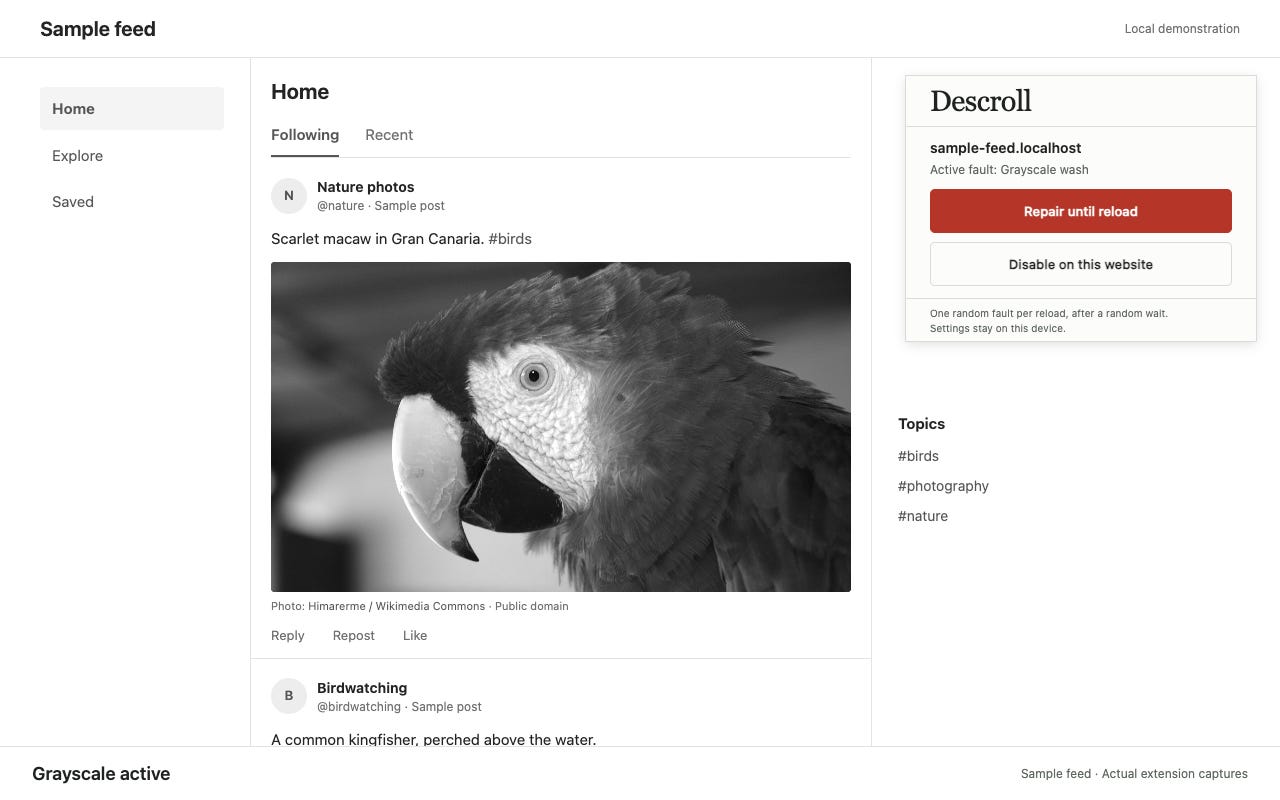
I wanted to explore that and start small. That’s why I’ve built Descroll, a lightweight Chrome extension that adds some unpredictable friction rather than hard blocking certain web apps. It’s free and everything exists locally so nothing leaves your device. Just enable it on a site of choice and it may, after a time, decide to turn the site grayscale or something fun like inverted scrolling. You can find it on the Chrome Web Store, and on iOS for Safari.
Does this tool help you close the feed when you meant it? Try turning it on for Reddit, Instagram, or X. I’d love to hear if you have feedback or feature requests. You can reach me here, on Substack, or at thomas@tjlvn.com. Feel free to subscribe if you’d like to hear more about Small Tech.